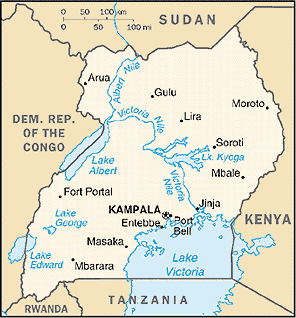
 Capital:
Kampala
History:
The long-time inhabitants of the region were conquered by the British in the late 1800s and organized into a protectorate in 1894. Independence was achieved in 1962.
After independence Uganda suffered brutally at the hands of dictators Idi Amin and Milton Obote, whose combined repression left about 400,000 dead. Since 1986, Yoweri Museveni has maintained a fierce grip on power. Museveni was long popular and home and abroad for bringing stability and economic growth to Uganda, but his image has taken a hit in recent years. He won reelection in 2006 and 2011 after removing the term limit for the presidency, but there were widespread allegations of fraud.
Climate:
Tropical
People:
Population – 33,398,682
Median Age – 15 years
Population Growth Rate – 3.563%
Life Expectancy – 52.98 years
Literacy – 66.8%
Average Years of Schooling – 11 years (male), 10 years (female)
Urban population – 13%
Languages/Ethnicities/Religions:
English and Swahili are both official. Though they are typically not spoken natively, they are learned through school and the media. Luganda and other ethnic languages are generally spoken as native tongues.
Baganda 16.9%, Banyakole 9.5%, Basoga 8.4%, Bakiga 6.9%, Iteso 6.4%, Langi 6.1%, Acholi 4.7%, Bagisu 4.6%, Lugbara 4.2%, Bunyoro 2.7%, other 29.6%
Christian 83%, Muslim 12%, Other 3.1%, None 0.9%
Economy:
GDP Per Capita – $1,300 (2009 est.)
GDP Composition by Sector:
Agriculture: 22.2%
Industry: 25.1%
Services: 52.8%
Labor force – by occupation:
Agriculture: 82%
Industry: 5%
Services: 13%
What it is known for:
• Wildlife
• Lake Victoria (which is also bordered by Kenya and Tanzania)
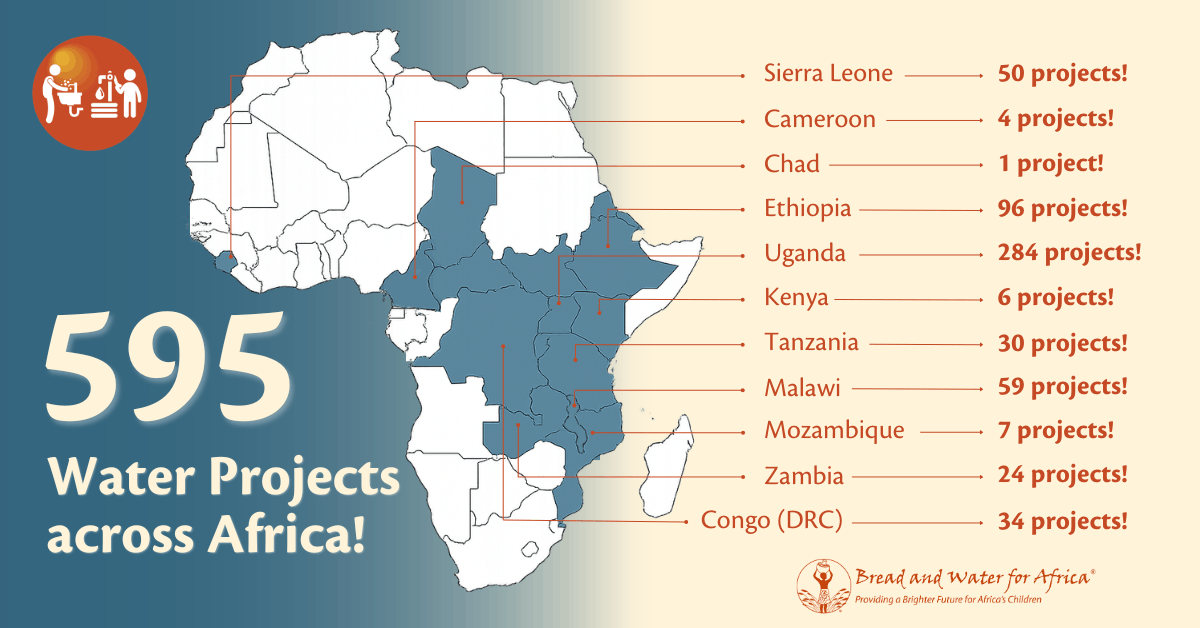
BWA’s Focus Areas in Uganda:
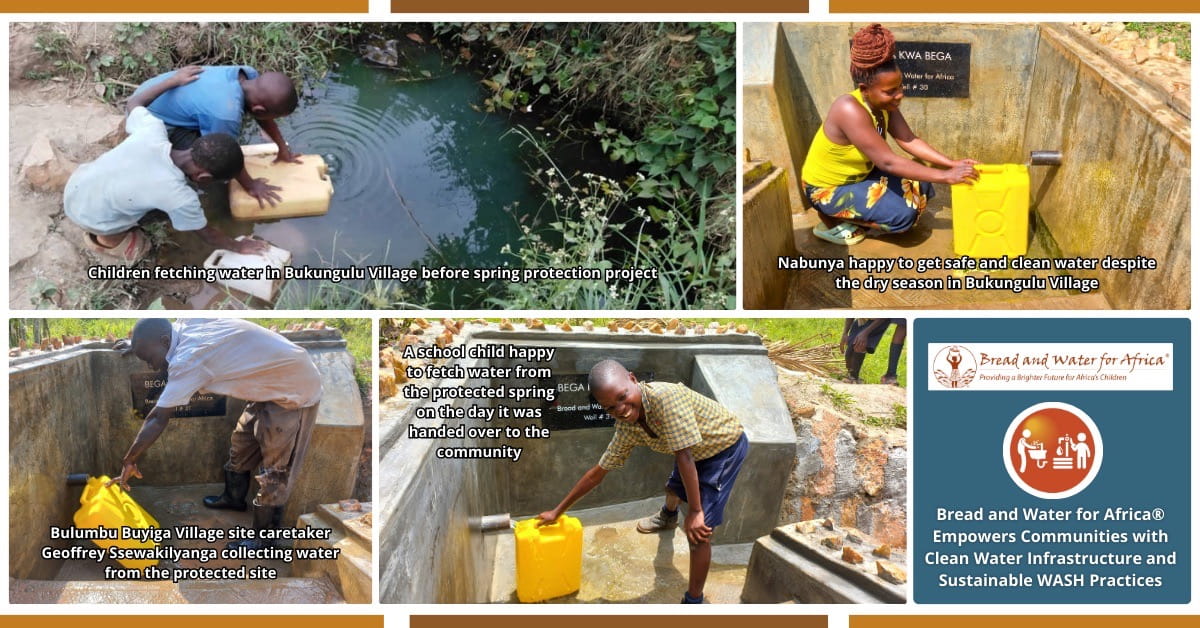
• Water
• Heifer Projects
• Women’s Empowerment Program
• Vocational Training