

Justus and Maria Thembo live in Nyahuka, Uganda. Several years ago Nyahuka was a small trading center with about 4,000 people, all sharing two springs as their only safe source of drinking water. Many people did not want to stand in line at the springs, so they would drink directly from the Nyahuka river. Justus would go late in the evening to avoid long lines at the spring and Maria would walk over 3 km per day to carry water from the river for cooking and bathing. Cholera and other waterborne diseases were a serious problem.
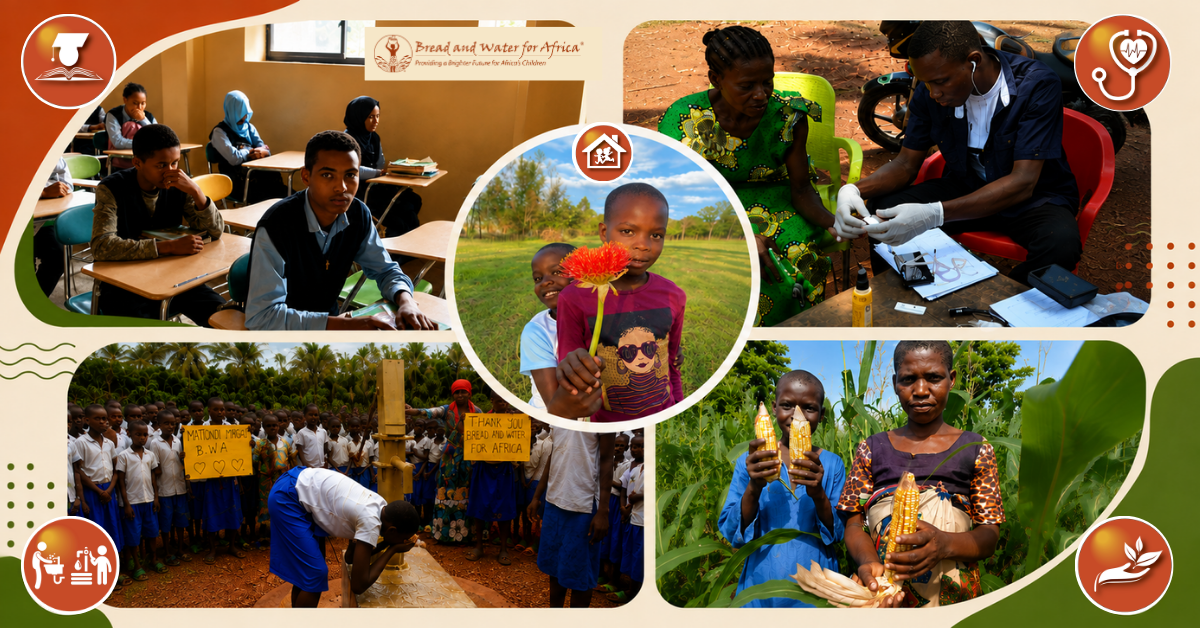
Bread and Water for Africa® has supported programs to help supply clean water to Nyahuka, Uganda. Today, Nyahuka has become a bustling town of about 15,000 people. Currently there are 20 households and one church sharing a water tap with over 50 water taps serving the rest of the town and a total of 120 taps serving surrounding villages.
Justus would like to thank Bread and Water for Africa® supporters who made the many benefits of clean water possible — waterborne diseases are eliminated, health is improved, and the time, effort, and expense of collecting water is greatly reduced.