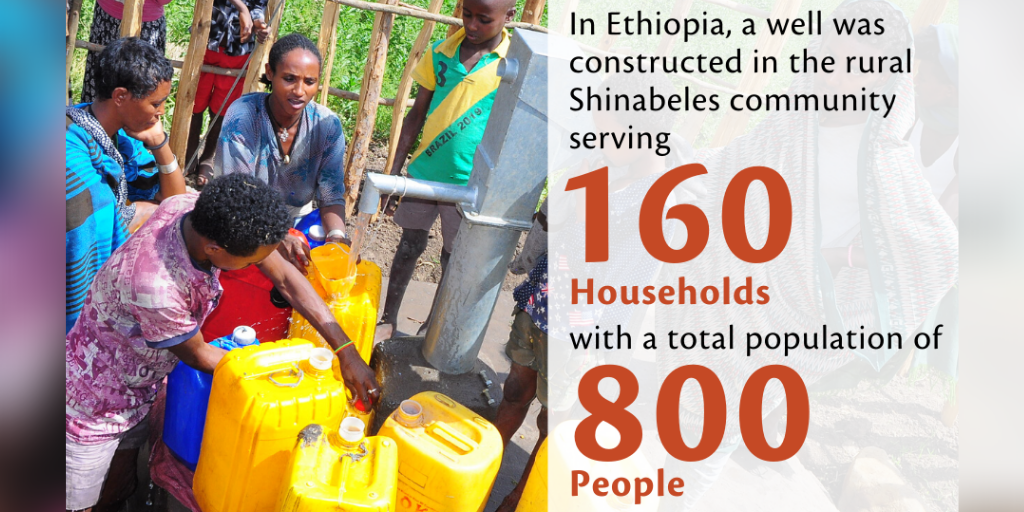
Thanks to the supporters of Bread and Water for Africa®, our most recent water well project was completed in Ethiopia.
Thanks to all of you , as well one particularly generous supporter, Joseph Grush and his granddaughter, Alexis, more than 160 households in the rural village of Shenabeles with a total population of 800 who have access all the clean safe water they need for drinking, cooking, bathing and washing, and particularly in these times of the worldwide coronavirus pandemic, to be able to wash their hands frequently.
Prior to the digging of the well, Shinabeles residents, mostly young girls carrying water on their heads in containers that weigh practically as much as they do, had to walk 6 miles to a small shallow well, their nearest source of potentially uncontaminated water.
But that’s all changed for them today, thanks to Mr. Grush and Alexis, and all of our supporters who donated what they could afford to give the gift of life to the residents of Shinabeles and preventing them from contacting a serious waterborne lines, and even death all due to a lack of clean water.