Capital:
Yaoundé
History:
Cameroon was created by combining two regions, one of which had been colonized by the French and another (the much smaller part) colonized by the British. Since independence, in 1961, there have only been two leaders. Paul Biya has held power since 1982 and, despite nominally expanding political freedoms and multi-party elections, allegations of fraud have been rampant in recent years. Nonetheless, the country has been consistently stable in a very volatile region.
Climate:
Tropical to semiarid – varies according to geography
People:
• Population – 19,294,149
• Median Age – 19.3 years
• Population Growth Rate – 2.157%
• Life Expectancy – 54.04 years
• Literacy – 67.9%
• Average Years of Schooling – 10 years (male), 8 years (female)
• Urban population – 57%
 Languages/Ethnicities/Religions:
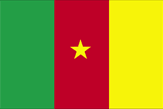
There 24 major African language groups and these ethnic languages are typically spoken natively. English and French are the two official languages, though they are spoken to varying degrees according to regional lines (English only in the northwest and southwest). Cameroonian Pidgin English is the most widespread lingua franca, and Camfranglais, a relatively new mixture of English, French, and Pidgin English has been gaining popularity in recent years.
Cameroon Highlanders 31%, Equatorial Bantu 19%, Kirdi 11%, Fulani 10%, Northwestern Bantu 8%, Eastern Nigritic 7%, other African 13%, non-African less than 1%
Indigenous beliefs 40%, Christian 40%, Muslim 20%
Economy:
GDP Per Capita – $2,300
GDP Composition by Sector:
• Agriculture: 19.8%
• Industry: 29.7%
• Services: 50.4%
Labor force – by occupation:
• Agriculture: 70%
• Industry: 13%
• Services: 17
Main Exports:
crude oil and petroleum products, lumber, cocoa beans, aluminum, coffee, cotton
What it is known for:
• Foumban (city know for its collections of traditional African art, including a large museum)
• Beaches
• Wildlife parks
• Mousgoum Huts – made using pottery techniques and know for their unique shape