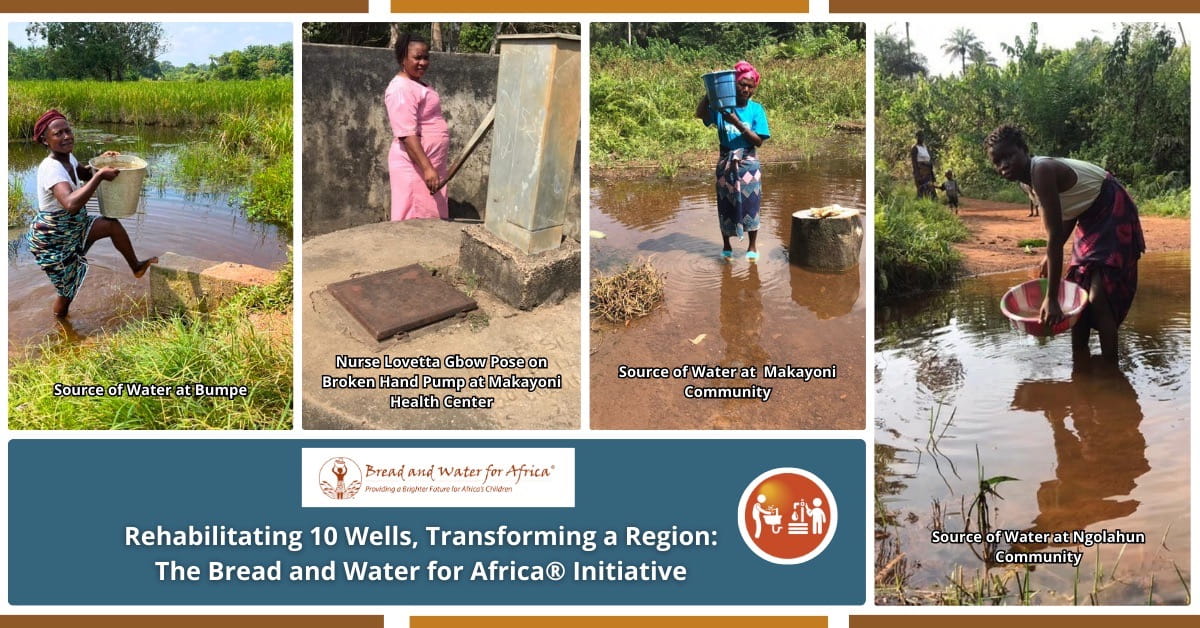
“In the heart of Bumpe Ngao Chiefdom in Bo District, Southern Sierra Leone, access to safe and reliable drinking water remains one of the most urgent and painful daily struggles.”
So says Joseph Kobba, program director of our in-country partner, Rural Youth Development Organization-Sierra Leone (RYDO-SL), who adds, “Every morning, thousands of families wake up uncertain whether they will find clean water for cooking, drinking, bathing, or medical care.”
But it wasn’t always like this in 10 rural communities that once had ready access to clean water.
“What were once symbols of hope and development, hand-pump wells constructed between 1999 and 2008 now stand silent, broken, and abandoned.”
This year, Bread and Water for Africa® is working to rectify the disturbing situation by repairing all of the wells located at the Buma, Bumpe, Kaniya, Kpetema, Makayoni, Sahn, and Yengema health centers, as well as at Kpetewoma Koker Town, the Amputee Camp Water Point – Bumpe, and the UBC (United Brethren in Christ) Primary School.
“The impact of these broken pumps is severe and deeply concerning,” Joseph stated..
“In health centers, patients often arrive carrying containers of water fetched from unsafe streams before they can receive treatment,” he told us.
“Infection prevention and control measures are compromised due to the lack of a reliable water supply.
“Mothers in labor face heightened risks during childbirth because clean water for sterilization and hygiene is unavailable.”
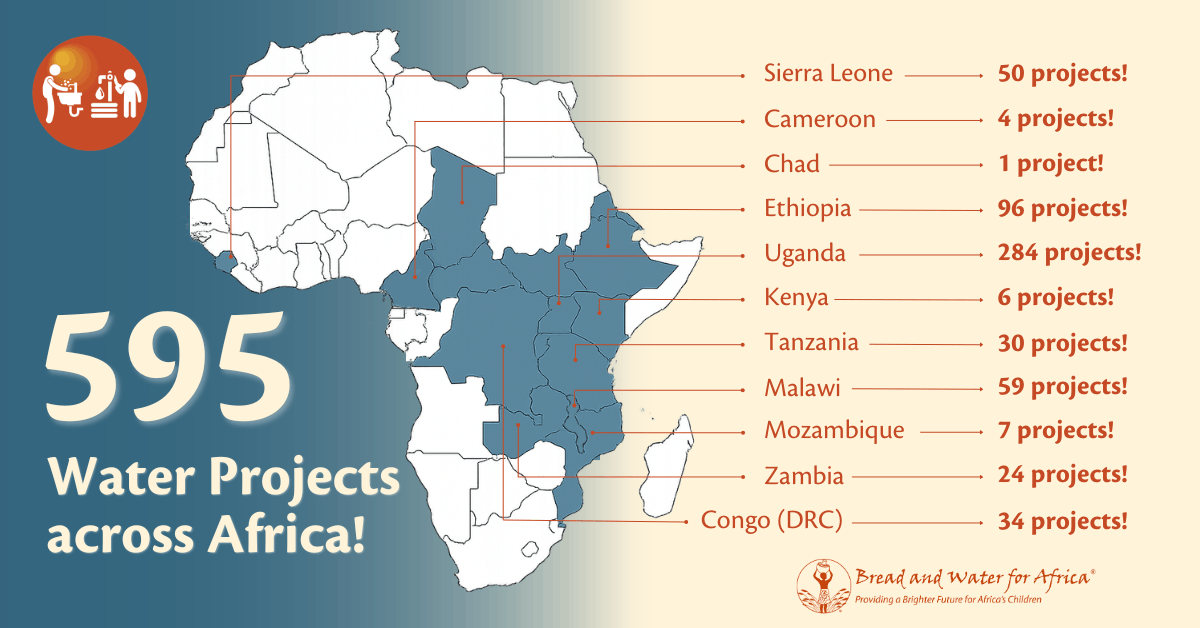
Joseph also reported that in the areas where these 10 non-functioning wells are located, there are a total of 59,016 residents, meaning that with the support from Bread and Water for Africa® before the end of the year, they will all have clean water at a cost of less than 25 cents each.
In addition to the comprehensive mechanical rehabilitation and replacement of the worn and damaged components, the project includes water quality testing and monitoring, the establishment of Water Management Committees (WMC) to oversee the pumps’ operations, the training of two pump mechanics per site to ensure rapid response to any breakdowns, community education of WASH (Water, Sanitation and Hygiene) promoting handwashing, safe storage and sanitation practices, as well as the introduction of preventative maintenance systems and community contributions mechanisms.
“By focusing on both infrastructure restoration and community capacity building, this ensures long-term sustainability rather than short-term relief,” comments Joseph.
And as he explained, “This initiative is not merely about repairing pumps:
“It’s about restoring confidence in rural health facilities.
“It’s about protecting mothers and newborns.
“It’s about keeping children in school.
“It’s about safeguarding the dignity of amputees and vulnerable households.
“Through this intervention, access to clean water will once again become a reliable foundation for improved public health, educational progress, and socio-economic stability across the region.”
Water for Safe Deliveries and Healthy Beginnings
The Bumpe Health Center is the primary health facility serving the central Bumpe community and surrounding villages, catering to thousands of residents. Established decades ago, it has historically relied on a hand-pump well constructed in 2000.
Today, the pump is non-functional, leaving the facility without a reliable water source.
“The absence of safe water has severe implications for healthcare delivery,” says Joseph.
As he explained, infection prevention and control measures are severely compromised, as staff cannot maintain proper hygiene during patient care, sterilize medical instruments, or clean delivery rooms.
Mothers arriving for childbirth rely on relatives to fetch water from unsafe streams before labor, exposing both mothers and newborns to preventable infections and complications.
The lack of potable water also affects the treatment of children with diarrhea, malaria, and other illnesses, as water used for patient care is often contaminated.
The health center’s inability to provide safe water increases disease transmission and diminishes trust in healthcare services.
Women may delay or avoid seeking care, and the community experiences higher morbidity and mortality, particularly among infants and young children.
“This situation underscores the urgent need to rehabilitate the hand pump, ensuring safe water supply for clinical services, hygiene, and maternal care,” he added.
“Rehabilitating the pump at the Bumpe Health Center will restore reliable access to clean water, enabling proper infection control, safe deliveries, and effective treatment of patients.
“This intervention will improve maternal and child health outcomes and strengthen the community’s confidence in healthcare services.”
At Bread and Water for Africa®, we are thrilled to celebrate nearly 40 years of our commitment to clean water development! This year, we're excited to enhance health centers' access to clean water in Sierra Leone, ensuring that communities thrive with this vital resource.