Tuesday, April 7, is the World Health Organization’s (WHO) World Health Day, celebrated annually to draw attention to a specific health topic of concern to people worldwide and to mark the anniversary of WHO's founding in 1948.
On World Health Day 2026, WHO aims to unite and mobilize the world under the theme “Together for health. Stand with science.” The year-long campaign celebrates “the power of scientific collaboration to protect the health of people, animals, plants, and the planet,” states WHO.
“The year‑long campaign spotlights both scientific achievements and the multilateral cooperation needed to turn evidence into action.”
WHO notes that “Science serves everyone, everywhere” and states that it and its partners “work around the clock to generate scientific knowledge on key health priorities, sharing evidence and strengthening countries’ research capacities and systems for more equitable access to health care.
“Science powers health,” WHO continues, and “the future will be shaped based on how we develop and practice science-led approaches for the health of all – not only humans, but also animals, plants, ecosystems and the entire planet – through the One Health approach.”
In addition, WHO urges people to “Stand with science” noting that “progress in public health is built on global solidarity and collaboration. WHO’s ability to connect science with real-life practice in communities and countries around the world is powered through its network of 800 collaborating centers.”
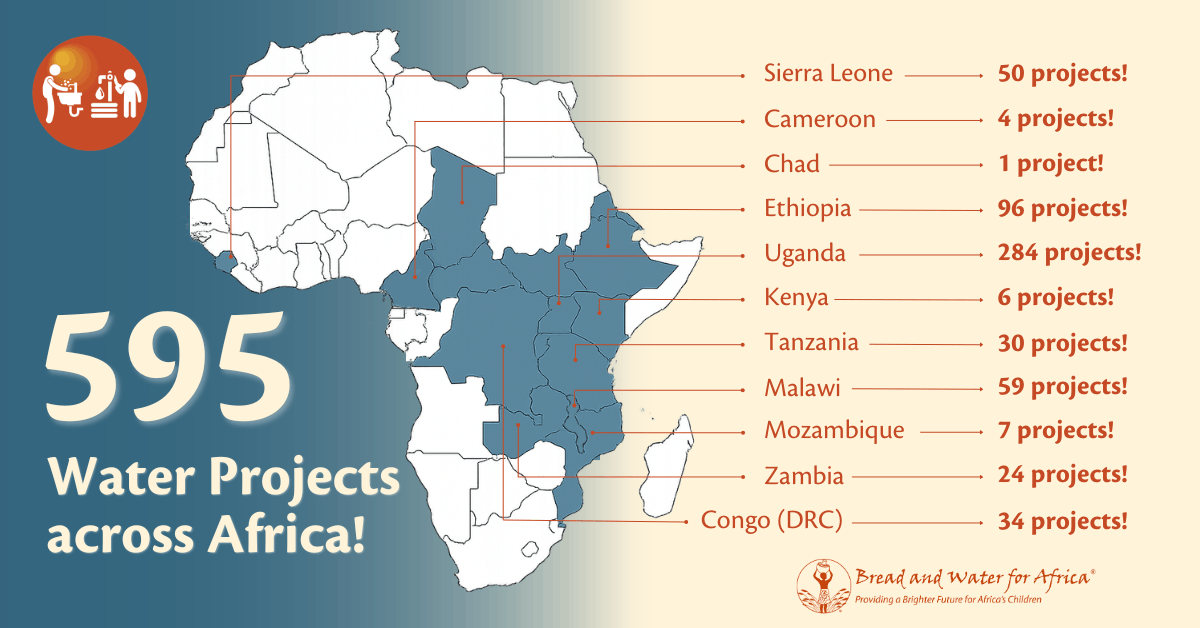
Since its inception, Bread and Water for Africa® has focused on improving access to healthcare across sub-Saharan Africa, particularly for vulnerable populations, including children, women, and men in remote and underserved regions. Our initiatives encompass a diverse array of healthcare infrastructures, including hospitals, rural health centers, urban clinics, and mobile health services. Geographically, our support spans multiple countries, including Cameroon, the Democratic Republic of Congo, Ethiopia, Kenya, Sierra Leone, and Malawi.
We provide comprehensive assistance, including financial support, medical supplies and equipment, mobility aids, and pharmaceuticals, to bolster healthcare delivery in these neglected areas, ultimately aiming to mitigate health disparities and enhance overall community well-being.
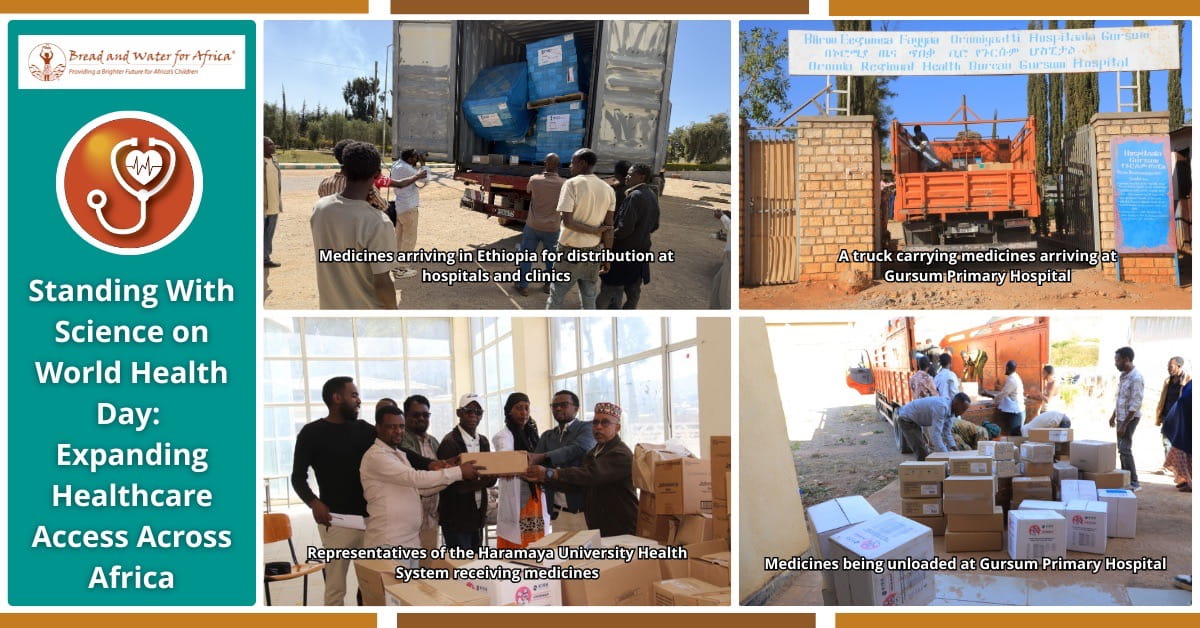
Towards the goal of the Bread and Water for Africa® healthcare support program, earlier this year, thanks to the supporters of Bread and Water for Africa® and our U.S. partner, MAP International, we were able to ship vital medications to our partner in Ethiopia, the Haramaya University Health Center system.
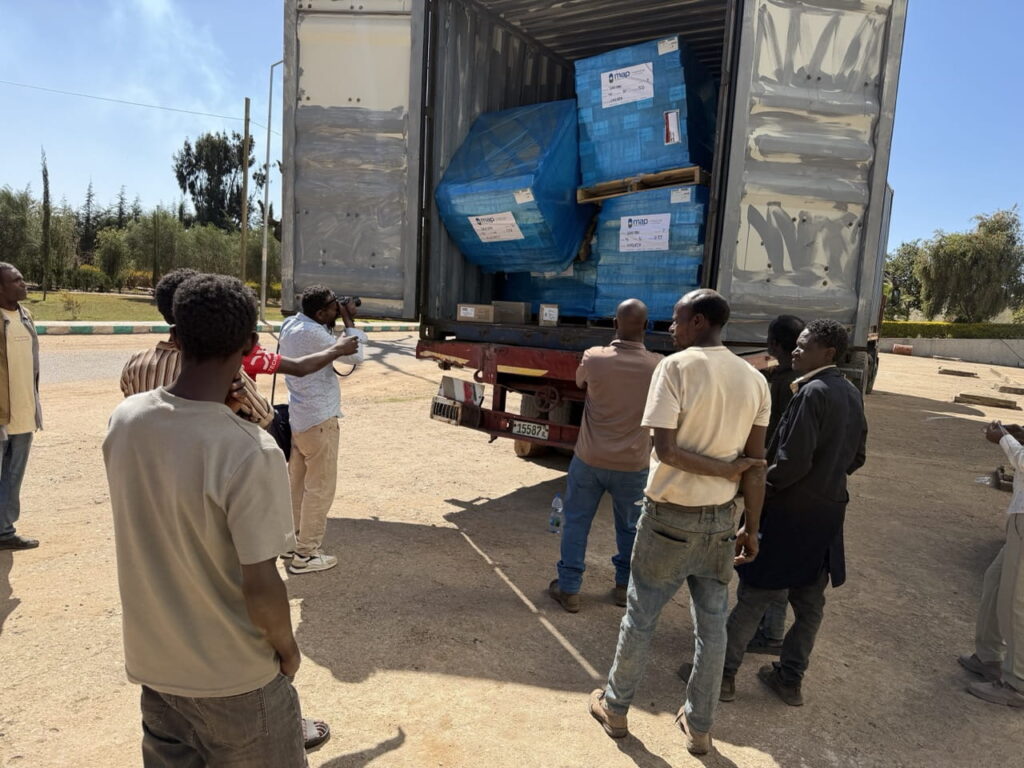
The shipment of a 40-foot container of donated medications included Amoxicillin, Acetaminophen, Carvedilol (used to treat high blood pressure), Celecoxib (a pain reliever) and others, along with medical supplies including sterile burn dressing and Johnson’s Baby Care Essentials value packs with zinc oxide, as well as Liquid IV-hydration multiplier, electrolyte solution, Hydrocortisone cream and Multiple Micronutrient Supplement prenatal vitamins.
Among the 10 hospitals and five health centers that received these items, the Gursum Primary Hospital in the Oromia Region of Eastern Ethiopia was the recipient, a designated primary-level hospital equipped to provide a wide spectrum of essential medical services to the surrounding community.
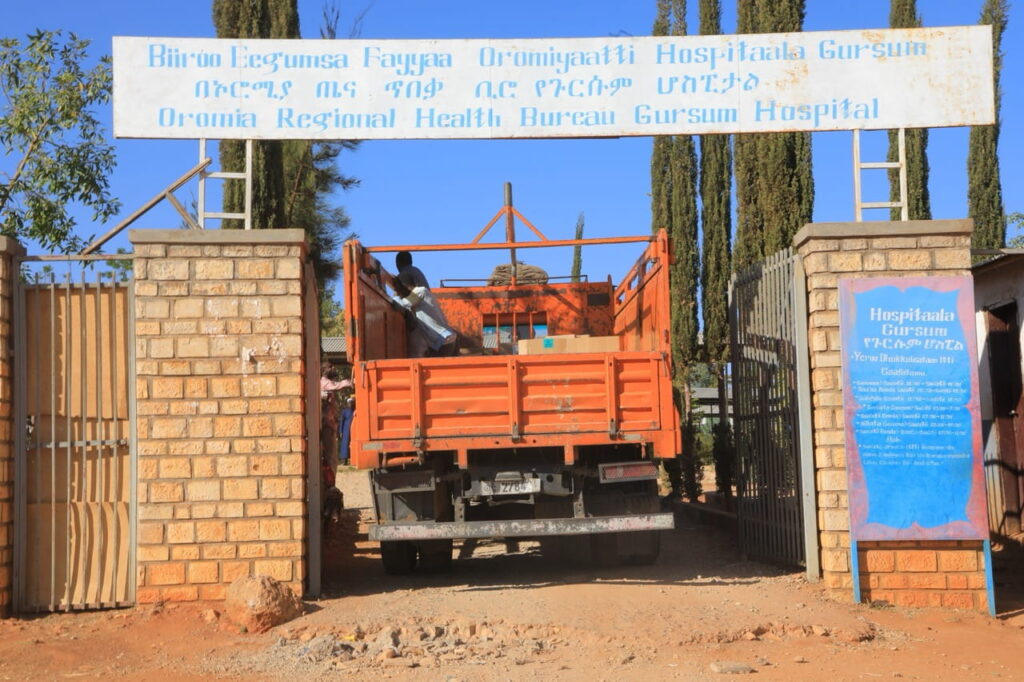
Gursum Primary Hospital provides core services including 24-hour emergency care providing round-the-clock medical intervention for urgent and life-threatening cases, maternal and child health with dedicated services focusing on the health of mothers and pediatric patients, internal medicine and general surgery offering both non-invasive treatments for systemic diseases and necessary surgical procedures, as well as nutritional and diagnostic support through integrated nutritional programs alongside comprehensive laboratory and pharmacy services to ensure accurate diagnosis and treatment.
As Haramaya University reports, “Beyond its direct clinical care, Gursum Primary Hospital plays a pivotal structural role in the regional healthcare system.
“It serves as the primary referral center for a network of numerous health centers and smaller health posts located throughout the Gursum Woreda (district).
“This makes it the central point for advanced care for patients who cannot be treated at the local clinic level.”
In March, the Haramaya University Health Center system reported to us on the delivery and distribution of the medications and supplies, stating:
“Firstly, on behalf of Haramaya University, we would like to express our heartfelt and deepest gratitude to MAP International, Christian Relief Services, and Bread and Water for Africa® for your exceptionally generous donation of vital medications.
“Your unwavering support plays an indispensable role in enhancing the overall health and well-being of our entire university community and the surrounding populations.
“The availability of these essential medications will not only significantly improve the care and treatment options available to our students and staff but will also extend its positive impact to the wider zonal population.
“This contribution empowers us to foster a healthier, more resilient, and productive society, which is foundational to achieving sustainable development and advancing the quality of life in our region.
“We sincerely appreciate your steadfast commitment to improving health outcomes within our region and for the strong partnership you have established with Haramaya University.
“Your kindness, generosity, and dedication serve as a powerful source of inspiration and motivation for us to continue striving for excellence in both education and community service.”