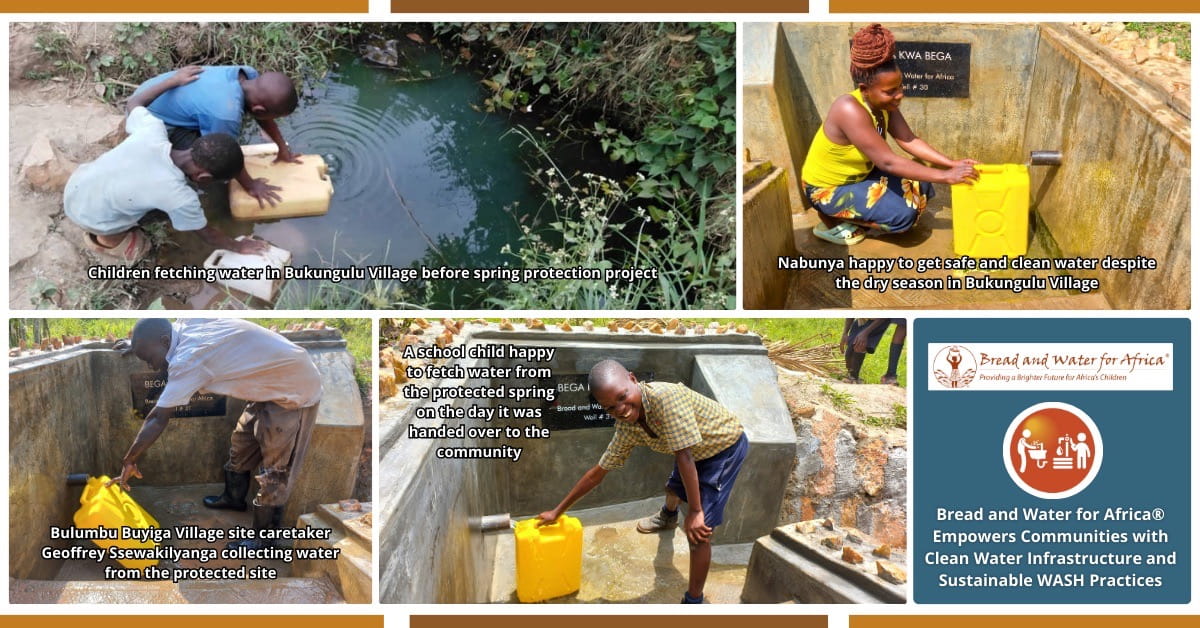
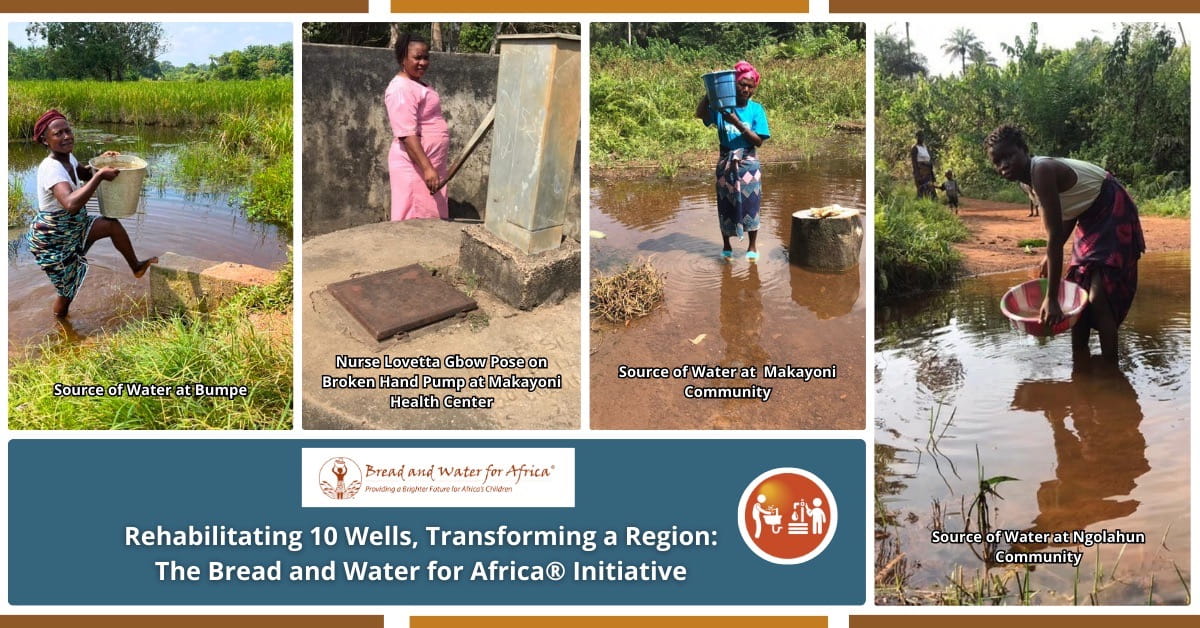
Bread and Water for Africa supports water wells in Sierra Leone

Water and Chicken Project in Sierra Leone

Monday, October 29, 2018

In the United States, access to clean water and having an abundant supply of farm-fresh eggs for cooking and baking are taken for granted. Very few homes in the U.S. don’t have running water and a carton of eggs in the refrigerator.

That’s not the case in Sierra Leone, where we have been working to construct a water well and create a poultry farm in cooperation with our partner there, Faith Healing Development Organization (FHDO).

Within the next few weeks, the poultry farm with a capacity of 3,000 chickens, is slated to open. This will provide thousands of eggs for the local community and create job opportunities for the residents of the village of Yankansa.

In conjunction with the poultry farm, a water well was dug to provide clean water for the chickens, as well as serve thousands of people living in the surrounding area.

“Access to safe drinking water at the farm was a serious challenge,” reported FHDO Executive Director Rev. Francis Mambu. “The project was welcome news in the community, especially for those living near the project site.”
Read More

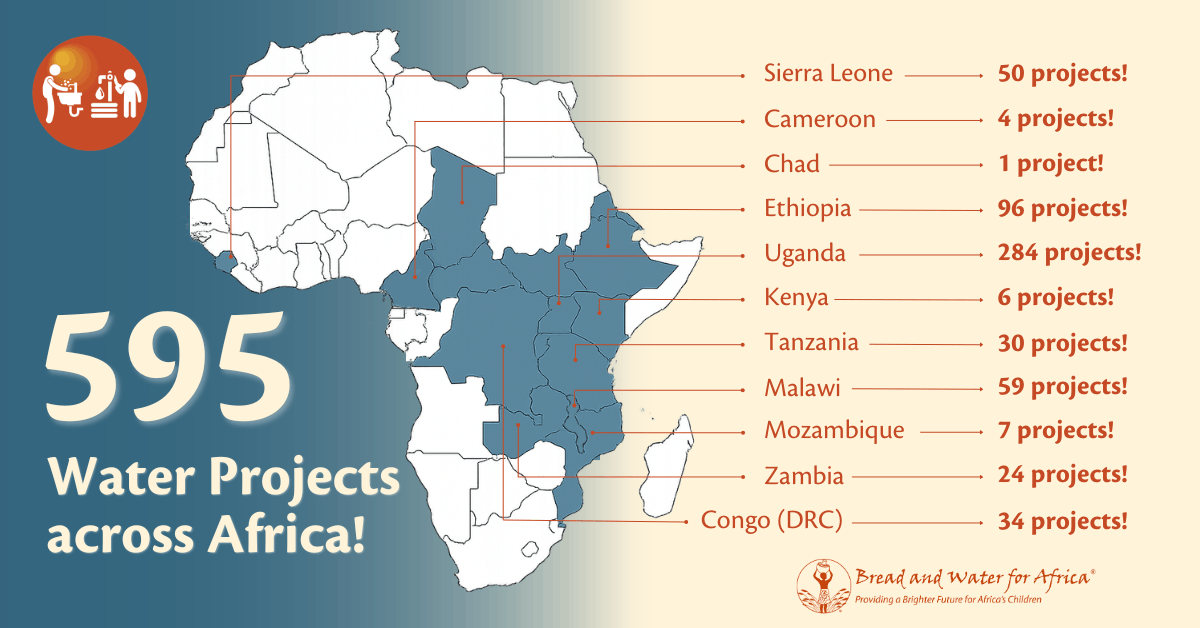
Map showing 595 water projects across Africa supported by Bread and Water for Africa® in multiple sub Saharan countries

Before World Water Day, There Was a Mission

Years before there was a United Nations’ World Water Day — held on March 22 every year since 1993 — Bread and Water for Africa® was working to provide clean water to thousands of people living in sub-Saharan African countries. In fact, as it was in the first year...

read more...
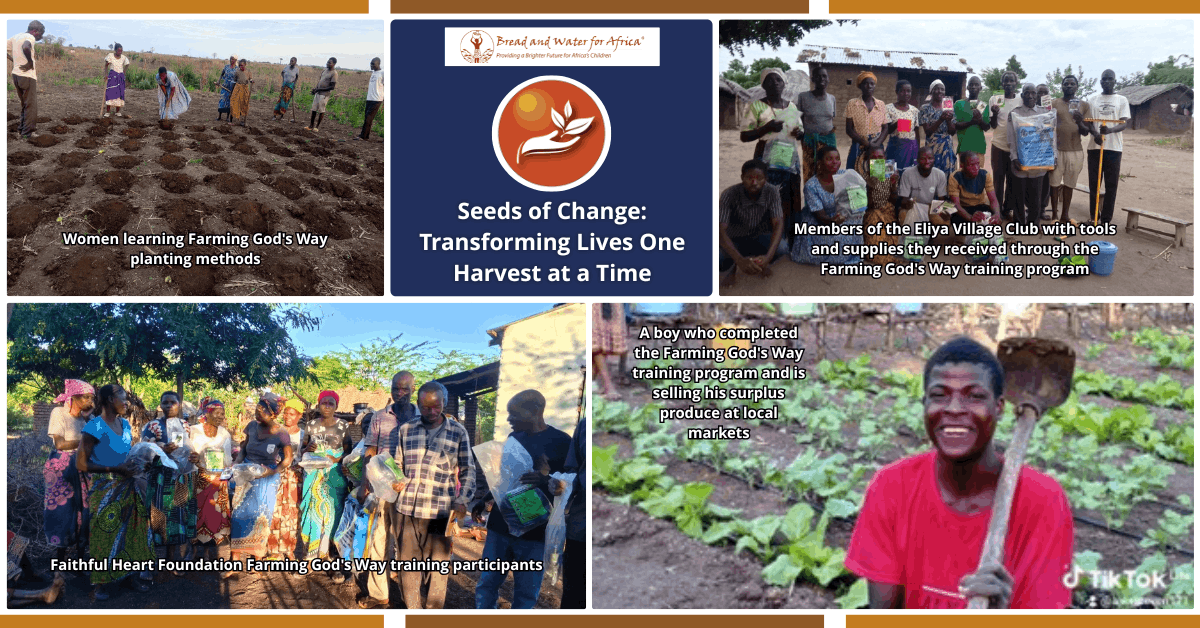
Seeds of Change Farming God’s Way training program in Malawi showing women learning planting methods, village members with tools, and a young farmer selling produce

Seeds of Change: Transforming Lives One Harvest at a Time

Last summer, thanks to the supporters of Bread and Water for Africa®,  a total of 153 individuals in Malawi, including 71 women, 31 men, 25 elders, 15 girls, and 11 boys, were trained in a type of conservation agriculture known as Farming God’s Way (FGW). “In...

read more...