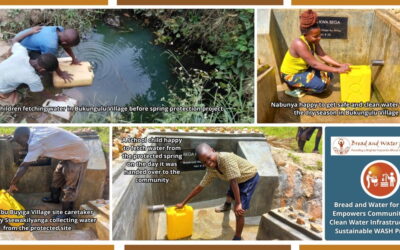
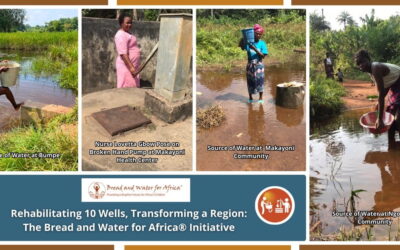
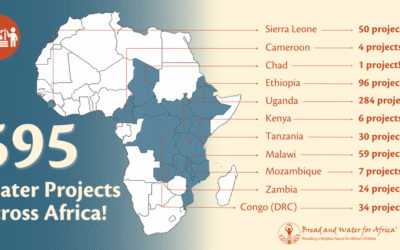
“Clean water is a lifeline. With ongoing cholera and mpox epidemics in eastern DRC, children and families need safe water now more than ever to protect themselves and prevent a deeper health crisis,” stated Jean Francois Basse, UNICEF's acting Representative in the...
News and Blogs
The Weight Children No Longer Carry: How Clean Water Is Transforming Education, Health, and Hope Across Africa
The Bread and Water for Africa® WASH (Water, Sanitation and Hygiene) program supports clean water development projects in sub-Saharan Africa to access life’s most vital resources, establishes school latrine facilities to promote reliable sanitation, and teaches basic...
The Joy They Never Forget: Christmas at the Children’s Homes
Christmas time at the children’s homes and orphanages supported by Bread and Water for Africa® in Tanzania, Zambia and Zimbabwe is a joyous time for all the children and youth living there, thanks in no small part to the supporters of Bread and Water for Africa®. And...
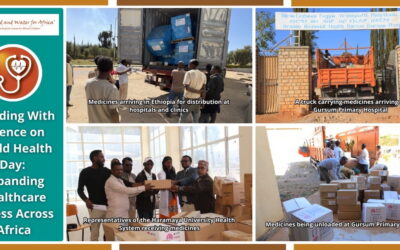
When Medicine Means Survival: A Lifeline for Ethiopia’s Most Vulnerable
Hospitals in Ethiopia, while differing from those in the United States, have a significant impact on their communities by providing essential healthcare services. These facilities are crucial for delivering lifesaving medications and care to impoverished farmers and...
Answering the Call: Combating Extreme Poverty with Bread and Water for Africa®
In 1990, about half of the population in sub-Saharan Africa and South Asia and two-thirds in East Asia and the Pacific were living in extreme poverty, according to the World Bank. However, in the three decades that followed, these three regions have followed quite...
Poverty in Africa: A Comprehensive Look at Causes, Progress, and Solutions
In 2024, Sub-Saharan Africa was home to just 16% of the world’s population but accounted for 67% of all people living in extreme poverty (World Bank). These numbers show the depth of the crisis and why conversations about development, health, and opportunity on the...
Hope on a Plate: Bread and Water for Africa® Changes the Course of Children’s Lives
In 2019, Bread and Water for Africa® announced the development and implementation of a School Meal program in partnership with the Seed Foundation’s Seed School located in the Kenyan slum of Kibera on the outskirts of Nairobi to provide two nutritious, filling meals...
When the Epidemic Stole Parents, She Became One: The Story of Kabwata Orphanage and Bread and Water for Africa® Orphan Care Program
When Angela Miyanda witnessed the devastation in her country of Zambia in the 1980s caused by the AIDS epidemic, she knew she could not just stand by as hundreds of thousands, if not millions, of the country’s children were suddenly orphaned, and infants born every...
Eat. Grow. Study. Hope Begins with a Meal
This Christmas, 300 children and youth (141 girls and 159 boys) attending the Seed School in the Nairobi slum of Kibera have a special reason to be joyful – thanks to the supporters of Bread and Water for Africa®, one year of free education and a daily meal of...
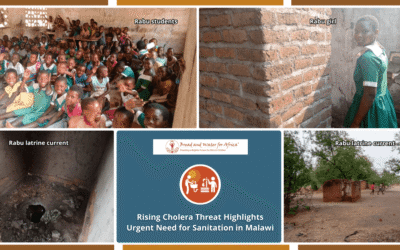
Ending the Silent Crisis: Bread and Water for Africa® Brings Sanitation and Safety to Schools
November 19 is World Toilet Day, an official United Nations (UN) international observance day to inspire action to tackle the global sanitation crisis, with the UN noting, “In a changing world, o“ Ending the Silent Crisis: Bread and Water for Africa® Brings Sanitation...
Turning Drought into Hope: Our Donors Bring Life-Sustaining Water to Lerato Children’s Home
In Zimbabwe, agriculture remains a cornerstone of the country’s economy, contributing about 17 percent to its GDP, and supporting more than 60 percent of its population of more than 16.6 million, which is roughly 9.96 million individuals. However, increasing climate...
Where Despair Turns into Hope: Stories of Vanessa and Issac
Tanzania faces a significant orphan crisis, with an estimated one million children and youth living without one or both parents, according to the Tanzania National Census in 2022, a number that has likely only risen in the past three years, primarily due to factors...